I Had Dinner With Five Gay Men I'd Never Met— Here's What Happened
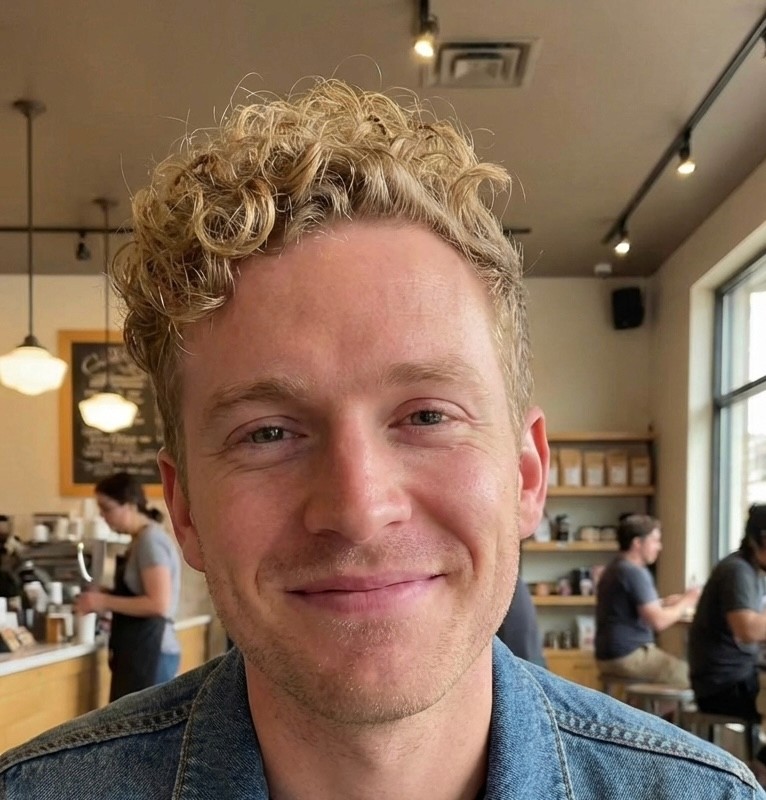
Hi, I'm Oliver. I'm 34, I live in London, and for a long time I assumed I'd just gotten used to feeling a bit disconnected from the world and not fitting in anywhere. This is the story of a Thursday evening that made me reconsider that.
I'd been on Grindr on and off for years. I knew exactly what it was, and I kept going back anyway (out of boredom, mostly, and the vague hope that maybe this time it would feel different). It never did. The conversations were short. The intentions were usually clear within the first three messages. And when they weren't, there was still this low hum of performance anxiety underneath everything. You weren't really talking to someone. You were talking to a profile wanting to hookup.
Hinge and Tinder were supposed to be the more serious version. They weren't.
I tried clubs too. I live in a city with a visible gay scene, which should help. And sometimes it did, for a night. But showing up to the same spots, running into the same faces, having the same slightly-too-loud conversations over music neither of us could quite hear: it wore me out. I wasn't meeting men who actually wanted to connect.
At some point I just quietly stopped trying. I think I'd half-convinced myself that the problem was me — that I just wasn't the type to fit into the 'normal' gay scene, but I never quite fit into straight spaces either. Somewhere in between, and not fully belonging to either.
The conversation that changed everything
So when a friend mentioned Mingleo, my first reaction was skepticism. Small group dinners for gay men, matched by personality, not looks. No swiping. No chatting in advance. You take a quiz, pick a date, and show up..
It sounded either very good or deeply awkward, with nothing in between. But I took a shot anyways.
Signing up took maybe ten minutes. The quiz covers things like how you communicate, what kind of conversations you're drawn to, whether you're more introverted or extroverted in social situations. It felt less like filling out a form and more like answering questions someone was genuinely curious about.
A few days later I got the venue details. A restaurant I'd walked past but never been into. Thursday evening. That was it. No list of names, no photos, no preemptive Googling of who I'd be sitting across from.

So What Was It Actually Like?
I won't pretend I wasn't nervous walking in. I had the address, a reservation under Mingleo, and absolutely nothing else. I stood outside for about 5 minutes longer than I needed to.
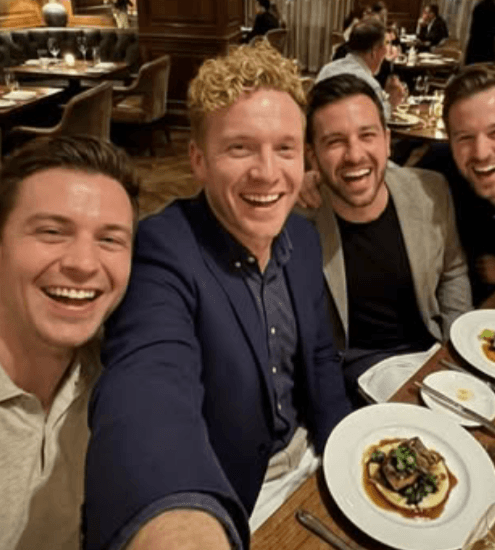
The four guys were already at the table. Mid-thirties, maybe early forties. Different energy, different backgrounds — one worked in design, one in healthcare, one vaguely in tech that he summarized differently every time someone asked. Within about twenty minutes, we'd moved well past small talk. Not because anyone forced it, but because there was no other agenda. Nobody was there to impress anyone. Nobody was trying to force hookups or figure out if the other person wanted the same thing. We were just four people who'd decided to show up.
Why did I like it so much?
I've thought about this a lot since, because it's easy to say it was just a nice dinner and leave it at that. But I think it's worth being specific about why it worked.
Part of it was the shared context. Everyone there had made the same choice — to step off the apps, skip the bar, try something a little unusual. That creates an instant common ground that has nothing to do with compatibility. You already know these people are at least slightly curious, slightly open, slightly willing to be somewhere they're not entirely sure about.
Part of it was the format itself. Dinner is long. You can't scroll away from it. You have to actually sit with someone for two hours, which forces a kind of presence that other social formats don't. And when that works — when the conversation actually goes somewhere — it goes somewhere faster than you expect.

What happened after
After the dinner, Mingleo lets you indicate who you'd like to stay in touch with. If it's mutual, they connect you. I said yes to all three. Two of them said yes back.
I went back the following month. And the month after that. Each dinner was different — different people, different conversations, different restaurants. Some evenings were quieter than others. One was honestly one of the best nights I'd had in years.
At one of those dinners I met someone. We've been together four months now. I'm not saying that's the point of Mingleo — it isn't really, it's about connection in a broader sense. But it's what happened.
Openly - 2026
I Had Dinner With Five Gay Men I'd Never Met— Here's What Happened
Hi, I'm Oliver. I'm 34, I live in London, and for a long time I assumed I'd just gotten used to feeling a bit disconnected from the world and not fitting in anywhere. This is the story of a Thursday evening that made me reconsider that.
I'd been on Grindr on and off for years. I knew exactly what it was, and I kept going back anyway (out of boredom, mostly, and the vague hope that maybe this time it would feel different). It never did. The conversations were short. The intentions were usually clear within the first three messages. And when they weren't, there was still this low hum of performance anxiety underneath everything. You weren't really talking to someone. You were talking to a profile wanting to hookup.
Hinge and Tinder were supposed to be the more serious version. They weren't.
I tried clubs too. I live in a city with a visible gay scene, which should help. And sometimes it did, for a night. But showing up to the same spots, running into the same faces, having the same slightly-too-loud conversations over music neither of us could quite hear: it wore me out. I wasn't meeting men who actually wanted to connect.
At some point I just quietly stopped trying. I think I'd half-convinced myself that the problem was me — that I just wasn't the type to fit into the 'normal' gay scene, but I never quite fit into straight spaces either. Somewhere in between, and not fully belonging to either.
The conversation that changed everything
So when a friend mentioned Mingleo, my first reaction was skepticism. Small group dinners for gay men, matched by personality, not looks. No swiping. No chatting in advance. You take a quiz, pick a date, and show up..
It sounded either very good or deeply awkward, with nothing in between. But I took a shot anyways.
Signing up took maybe ten minutes. The quiz covers things like how you communicate, what kind of conversations you're drawn to, whether you're more introverted or extroverted in social situations. It felt less like filling out a form and more like answering questions someone was genuinely curious about.
A few days later I got the venue details. A restaurant I'd walked past but never been into. Thursday evening. That was it. No list of names, no photos, no preemptive Googling of who I'd be sitting across from.
So What Was It Actually Like?
I won't pretend I wasn't nervous walking in. I had the address, a reservation under Mingleo, and absolutely nothing else. I stood outside for about 5 minutes longer than I needed to.
The four guys were already at the table. Mid-thirties, maybe early forties. Different energy, different backgrounds — one worked in design, one in healthcare, one vaguely in tech that he summarized differently every time someone asked. Within about twenty minutes, we'd moved well past small talk. Not because anyone forced it, but because there was no other agenda. Nobody was there to impress anyone. Nobody was trying to force hookups or figure out if the other person wanted the same thing. We were just four people who'd decided to show up.
Why did I like it so much?
I've thought about this a lot since, because it's easy to say it was just a nice dinner and leave it at that. But I think it's worth being specific about why it worked.
Part of it was the shared context. Everyone there had made the same choice — to step off the apps, skip the bar, try something a little unusual. That creates an instant common ground that has nothing to do with compatibility. You already know these people are at least slightly curious, slightly open, slightly willing to be somewhere they're not entirely sure about.
Part of it was the format itself. Dinner is long. You can't scroll away from it. You have to actually sit with someone for two hours, which forces a kind of presence that other social formats don't. And when that works — when the conversation actually goes somewhere — it goes somewhere faster than you expect.
What happened after
After the dinner, Mingleo lets you indicate who you'd like to stay in touch with. If it's mutual, they connect you. I said yes to all three. Two of them said yes back.
I went back the following month. And the month after that. Each dinner was different — different people, different conversations, different restaurants. Some evenings were quieter than others. One was honestly one of the best nights I'd had in years.
At one of those dinners I met someone. We've been together four months now. I'm not saying that's the point of Mingleo — it isn't really, it's about connection in a broader sense. But it's what happened.